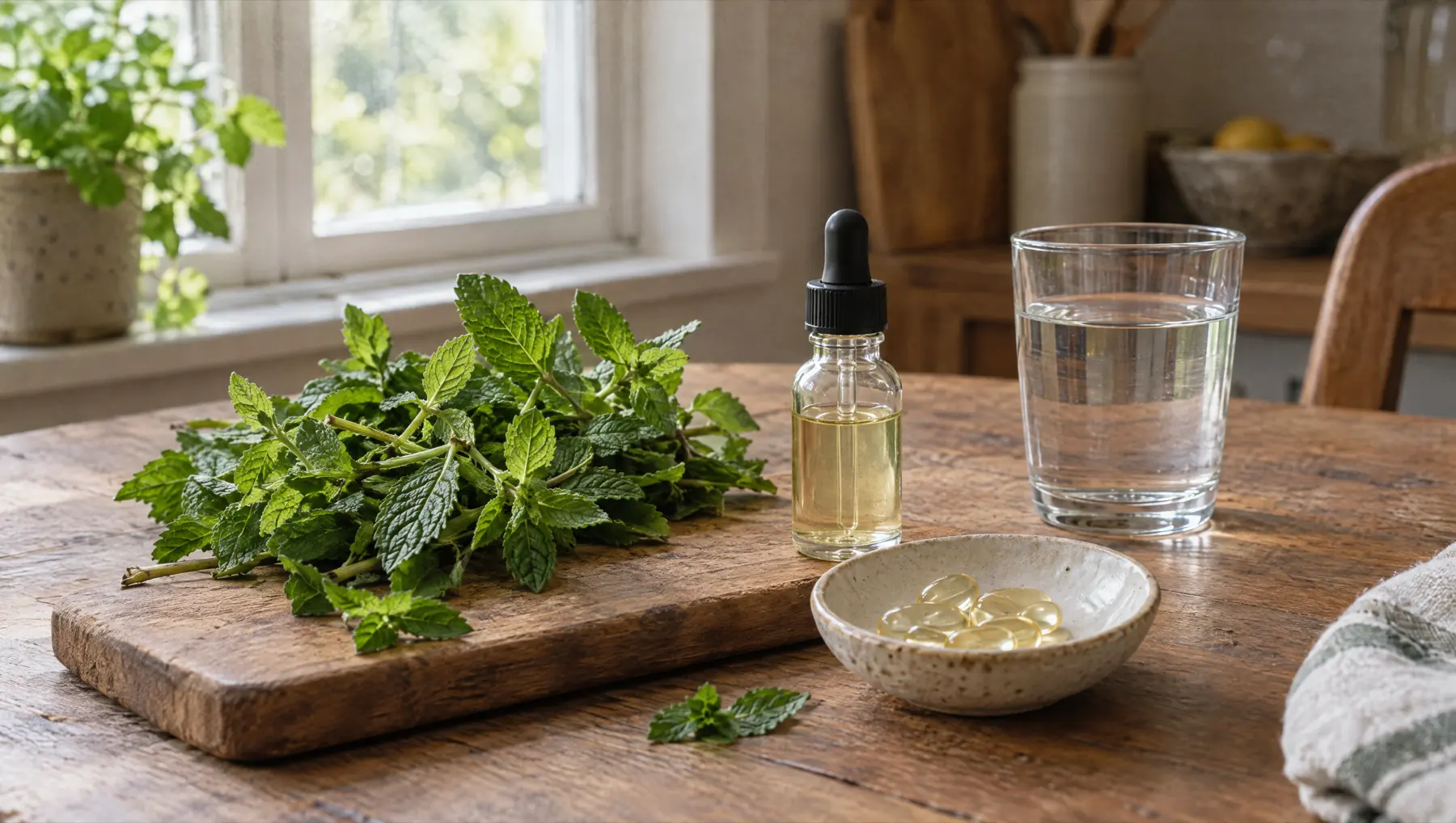
What the plants can and cannot do
Chamomile and valerian are the two most-recommended sleep herbs in the world. The trials are smaller and softer than the recommendations. That is worth knowing before you buy either.
The Alchemist is the part of Ethos most likely to embarrass us, so we are starting it with the least flattering thing we know.
Two herbs dominate every list of natural sleep aids ever written: chamomile and valerian. Both are ancient. Both are cheap. Both are recommended with far more confidence than the evidence supports.
Chamomile
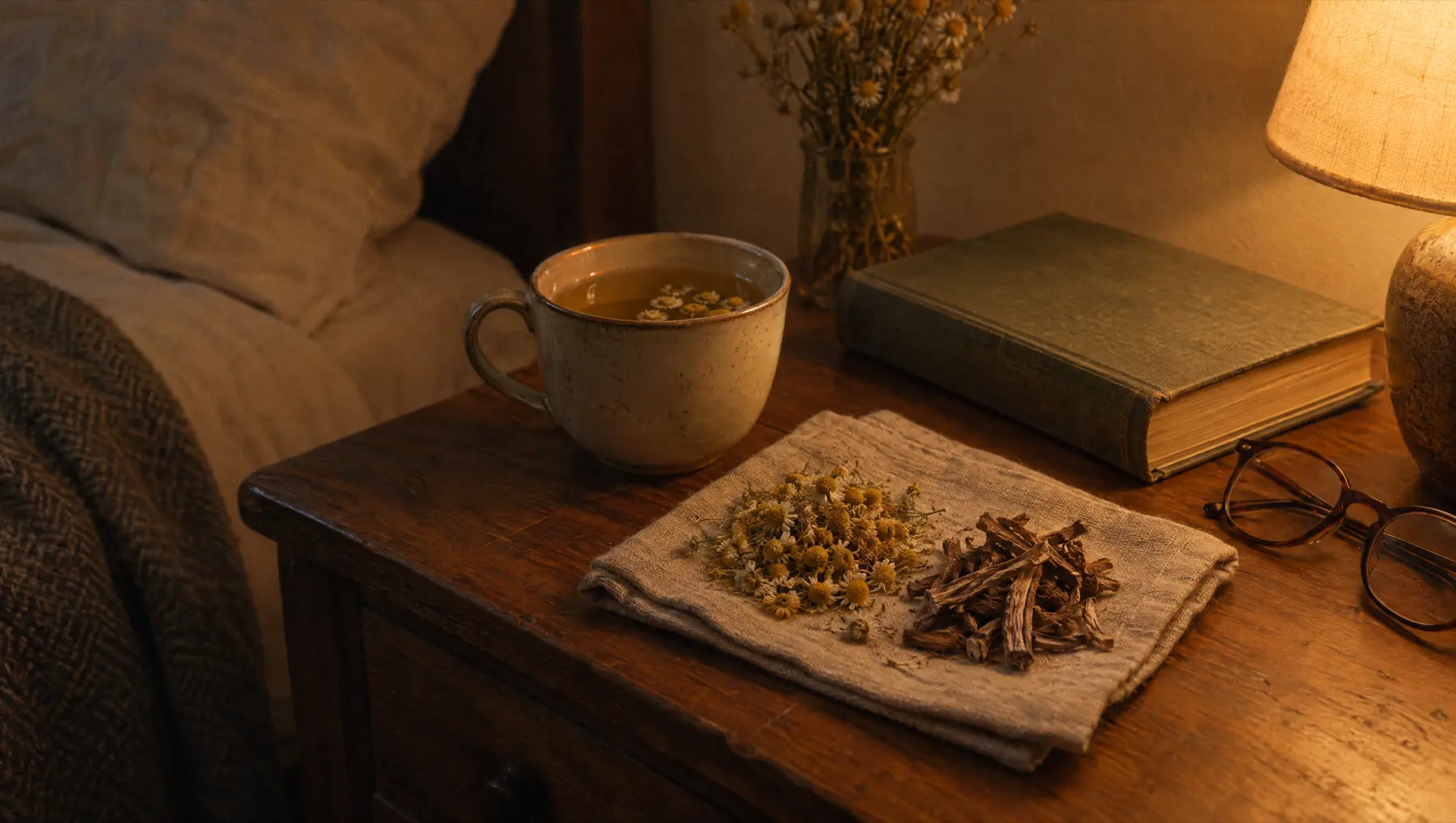
Chamomile is among the better-studied calming herbs, and the picture is mixed rather than damning. A frequently-cited 2011 trial in people with chronic insomnia found modest improvements in daytime functioning, but sleep latency, the time it takes to actually fall asleep, did not shift significantly.
Read that carefully, because it is the useful bit. Chamomile performed better as a wind-down ritual than as a physiological sedative. If what keeps you awake is anxiety rather than a broken body clock, there is a plausible mild anxiolytic effect to work with. If you are waiting for the tea to switch you off, you will be waiting.
Valerian
Valerian has the stronger reputation of the two, and the weaker record. Reviews of the trial literature have repeatedly concluded that there is insufficient evidence that valerian treats insomnia, with results that frequently do not separate from placebo.
Both are well tolerated. Neither is reliably better than placebo. Those two facts sit together comfortably.
Why we still keep them on the shelf
Because “no better than placebo” is not the same as “does nothing”, and because the adverse-event profiles in these trials look much like placebo too. A warm cup at the same time each night is a real behavioural cue for sleep, whatever the leaf in it is doing. That is worth something, as long as nobody dresses it up as pharmacology.
Here is where we draw the line, and it is the line for this whole section of the site:
- A plant with a soft evidence base is a fine ritual. It is not a treatment for a diagnosed condition.
- Herbs interact with drugs. Valerian on top of a prescription sedative is a real interaction, not a folk worry. Ask a pharmacist, who will answer for free.
- Be suspicious of the confident ones. If a page about a herb has no caveats, that page is selling the herb.
- Insomnia has a treatment that works. Cognitive behavioural therapy for insomnia beats every herb in this article, and it is the first thing we would point anyone towards.
We will write about plants here for as long as Ethos exists, because they are genuinely interesting and some of them genuinely work. We will just keep telling you which is which.