One word, three thousand ingredients
“Fragrance” is a single line on a label and a legal shelter for thousands of chemicals. Here is how that happened, and what it means for a shopping list.
Every other ingredient on a cosmetics label has to be named. One does not.
The US Fair Packaging and Labeling Act of 1973 requires cosmetics companies to list their ingredients on the pack. It also carves out an exception for fragrance, on the reasoning that a scent formula is a trade secret and naming it would hand a competitor the recipe.
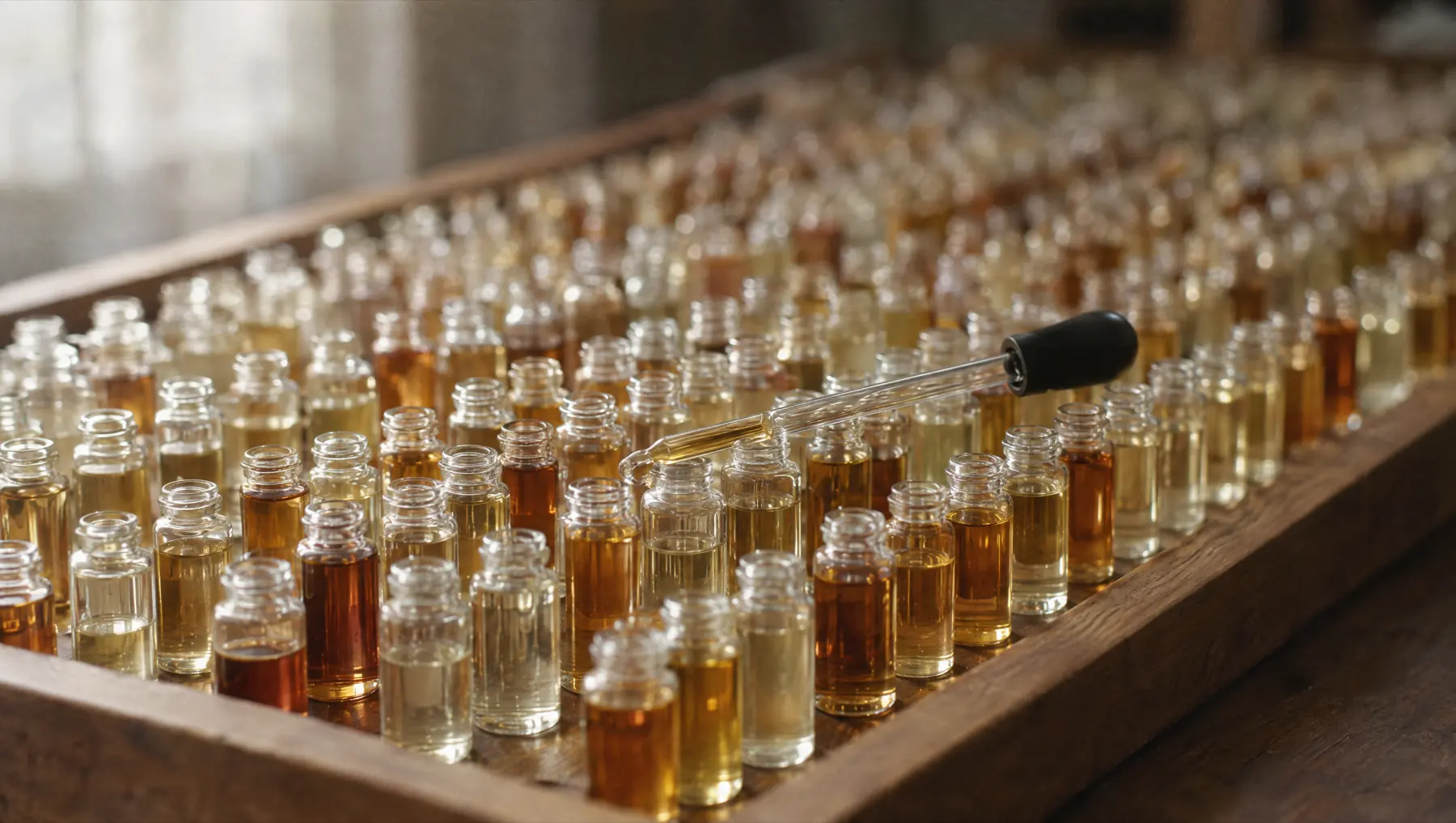
Fifty years later, that exception has grown into something the drafters would probably not recognise. A single word on a label (fragrance, or parfum) can stand in for any combination drawn from a palette of thousands.
How large is thousands
The International Fragrance Association publishes a transparency list of the materials its members use. In its 2022–23 edition that list ran to 3,619 distinct chemicals. Of those, roughly 3,224 are there to create scent. The remaining 395 are described as functional: they are in the bottle to do a job other than smell.
Phthalates are the clearest example of the functional group. They are not there to smell of anything. They are there to make a scent last longer on skin, and some of them are associated with effects on the male reproductive system.
3,619 chemicals may appear behind one word. As of spring 2023, the industry’s own standards had restricted 86 of them.
Voluntary is doing a lot of work in that sentence
IFRA sets safety standards for its members. Those standards are voluntary, and compliance is largely self-reported: manufacturers are not routinely required to demonstrate to an outside body that they have followed them. Critics, including the Breast Cancer Prevention Partners and the Environmental Working Group, have also noted which materials the industry’s expert reviews have tended not to cover, phthalates and synthetic musks among them.
None of this means every scented product is dangerous. Most of the 3,619 are ordinary aroma chemicals doing ordinary work. It means something narrower and more annoying: for this one line on the label, a diligent reader cannot get to the bottom of it. The information is not hidden badly. It is not there.
What we do with this
- Fragrance-free beats unscented. Unscented often means a masking fragrance was added to cover a raw material’s smell. Fragrance-free means none was added at all.
- Named essential oils are a different conversation. They are declarable, and they are also a common source of sensitisation. Naming them at least lets you decide.
- We ask what the scent is doing. On a candle, scent is the product. On a face oil that will sit on skin overnight, it is decoration with a cost.
- Textiles count too. Fabric softeners and finishes carry fragrance into the sheets you breathe against for eight hours.
This is the single rule that removed the most products from our shop. Not because scent is wicked. Because on a label, it is the one place we cannot check.