What heat does to plastic
Researchers heated food-safe plastic containers in a microwave for three minutes. Each square centimetre released millions of tiny plastic pieces into the food.
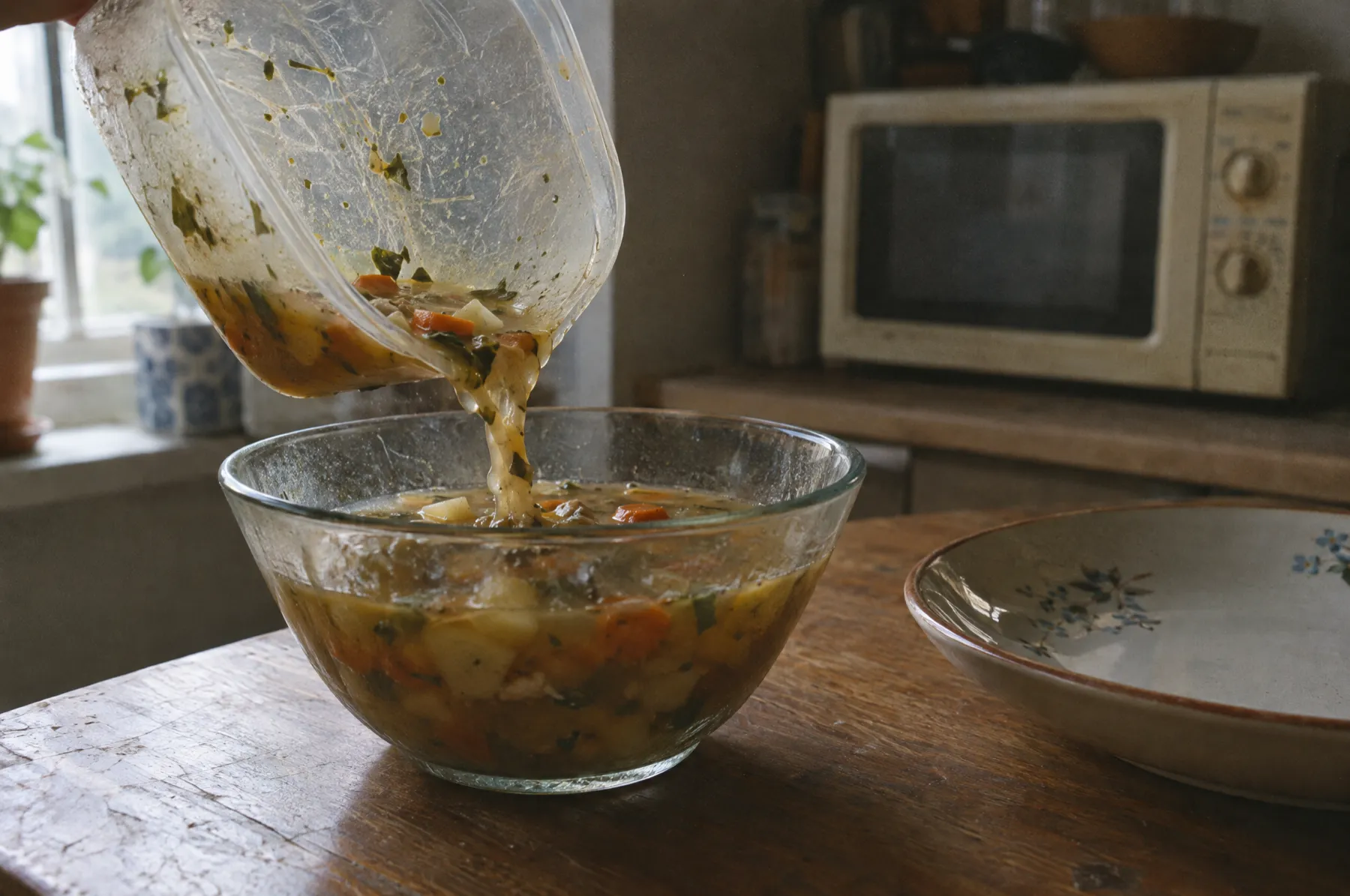
This is one of the easiest changes in this room. It costs nothing, and it takes one second.
The study
In 2023 a team at the University of Nebraska–Lincoln, led by Kazi Albab Hussain, tested baby food containers made of plastic. The plastics were polypropylene and polyethylene. Both are approved as safe for food.
They filled the containers with water or a mild acid, which acts like food such as tomato sauce. Then they heated them for three minutes in a normal microwave.
What they found
Each square centimetre of container released more than 4 million microplastics and more than 2 billion nanoplastics. Nanoplastics are so small that you cannot see them. Storing food in the fridge or at room temperature also released particles over time, but heat released by far the most.
Three minutes in the microwave released billions of tiny plastic pieces per square centimetre.
The team also put the particles on kidney cells in the lab. At the highest level, only 23 percent of the cells were alive after two days.
What this does not tell us
Cells in a dish are not a person. We do not yet know how much of these particles the body takes up, or what they do over many years. The researchers say the harm depends a lot on how much you are exposed to.
The EU has already acted on one plastic chemical
BPA is a chemical that was used in some plastics and in the lining of cans. In 2023 the European Food Safety Authority (EFSA) said BPA in food is a health risk. It set the safe daily limit about 20,000 times lower than before. Since January 2025 the EU has banned BPA in materials that touch food.
What we do
- We heat food in glass or on a plate, never in the plastic box.
- We let hot food cool before it goes into a plastic box.
- We store leftovers in glass jars when we can.
- We do not put plastic in the dishwasher if it is old or scratched.