


Food and supplements — what your skin actually needs
An honest sort of the shelf. What has evidence behind it, what is probably wasted money, and what matters far more than either.

I sell nothing on this page, which makes it easier to be straight with you.
The supplement aisle is one of the least honest places in wellness. Claims are loosely regulated, the studies are frequently funded by the people selling the capsule, and the format rewards confidence over accuracy. So here is my actual sort of the shelf, including the parts that are inconvenient for a site that also runs a shop.
The things that matter more than any supplement
This is the uncomfortable part, so it goes first.
Sun exposure is the single largest modifiable factor in how skin ages. Not a nutrient, not a serum — cumulative UV. Everything else on this page is a rounding error next to it.
Sleep is second. Skin repair is not a metaphor; it is a real process that happens largely at night, and it is measurably worse when you are short of sleep. No capsule compensates for four hours.
Not smoking, and moderate alcohol. Both are visible in skin within years.
Protein and calories in general. Skin is protein. People eating too little of it — which includes a lot of people eating very “clean” — see it in their hair and nails first.
If those four are not in place, nothing below will make a noticeable difference, and anyone telling you otherwise wants your money.
Reasonable, with caveats
Vitamin D, if you live where I live. At Danish latitudes your skin makes essentially none between October and March, whatever the weather does. This is one of the few supplements with a genuine, geography-driven case. Get your level checked rather than guessing, and take the dose that fits the result.
Omega-3, if you rarely eat oily fish. The evidence for skin specifically is modest — better for dryness and barrier function than for anything dramatic. If you eat mackerel or sardines twice a week you are already there, and the capsule adds little.
Zinc, if you are actually low. It matters for wound healing and skin integrity, and deficiency is real in some diets. But more is not better — high supplemental zinc interferes with copper absorption, and the people who take the most are frequently the ones who needed it least.
Notice the shape of all three: they are corrections for a deficiency, not enhancements. That is the honest use of a supplement.
Weak, oversold, or both
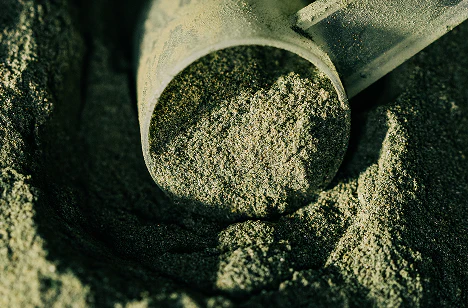
Collagen. The most confidently marketed product in the category. The mechanistic story — you swallow collagen, it becomes skin collagen — is not how digestion works; it is broken into amino acids like any other protein. Some trials on hydrolysed peptides report modest hydration and elasticity effects, but the literature is small, short, and heavily industry-funded. Possibly something. Not the something the packaging implies.
“Beauty” blends with twenty ingredients at trace doses. Almost always underdosed relative to anything studied, and priced for the label rather than the contents.
Detox and cleanse capsules. Nothing to add beyond what I wrote about detox: there is no reservoir to empty.
Very high-dose antioxidants. More is not better here either, and there are contexts where large doses of isolated antioxidants have performed worse than placebo. Food is a better delivery system than a pill for this whole category.
What to eat, if you want a short answer
Enough protein. Oily fish if you eat fish. A lot of plants, in a lot of colours — not because any single compound is magic, but because the variety covers the gaps you cannot see. Olive oil. Fewer things from packets.
That is genuinely most of it. It is not a very sellable paragraph, which is probably why it is not the one you usually read.
How to judge a claim
One question, and it works on almost everything: what would have to be true for this to work, and is that true?
Collagen has to survive digestion intact. It does not. A cleanse has to empty something. There is nothing to empty. A cream has to get an ingredient to a depth where it does something, at a dose that does something.
Most marketing does not survive that question, and asking it costs nothing.
Nothing here is medical advice. Supplements interact with medications and with each other, and deficiency is diagnosed with a blood test, not with a website. Talk to a doctor before starting anything.